
Latest Update November 16, 2026:
[cg_add-class=heading-style-h4]In a Nutshell
- An ESG goal sets the direction. An ESG target makes it measurable, with a baseline year, a target value and a deadline.
- EcoVadis, CDP and the ESRS now ask for the same elements: baseline, target, scope, method and progress. Since October 2026, EcoVadis no longer accepts quantitative targets without a documented baseline year.
- Progress on a target is only as credible as the evidence behind it. Proof Software keeps that evidence in one place and reuses it for every assessor.
Most companies have ESG goals. Far fewer can say, on the day a customer or rating provider asks, where they stand against them, from which baseline, and with what proof. In our conversations with sustainability teams, this gap came up again and again in autumn 2026, a time when EcoVadis tightened its rules on targets.
ESG goals are the commitments a company makes on environmental, social and governance topics, such as cutting emissions or improving workplace safety. ESG targets make those goals measurable: a target value, a baseline year to measure against, a deadline and a defined scope. They build on the ESG criteria a company is assessed on.
ESG Goals, Targets and KPIs: What Is the Difference?
The four terms are often used interchangeably, but assessors treat them differently. A goal is the direction. A target is the measurable commitment. A KPI is the metric you track. Evidence is what proves the KPI.
A company with goals but no targets is common. In our discussions, sustainability teams regularly describe goals that are defined but not yet measurable, or say they have no target framework at all and don't know where to start. Assessors are moving past that stage.
Where ESG Goals Come From
Good ESG goals start with what matters most for the company. A double materiality analysis shows which topics have the biggest impact on people and the environment, and which pose the biggest financial risks. Goals on those topics carry the most weight with customers and lenders.
Three external frameworks shape what those goals look like:
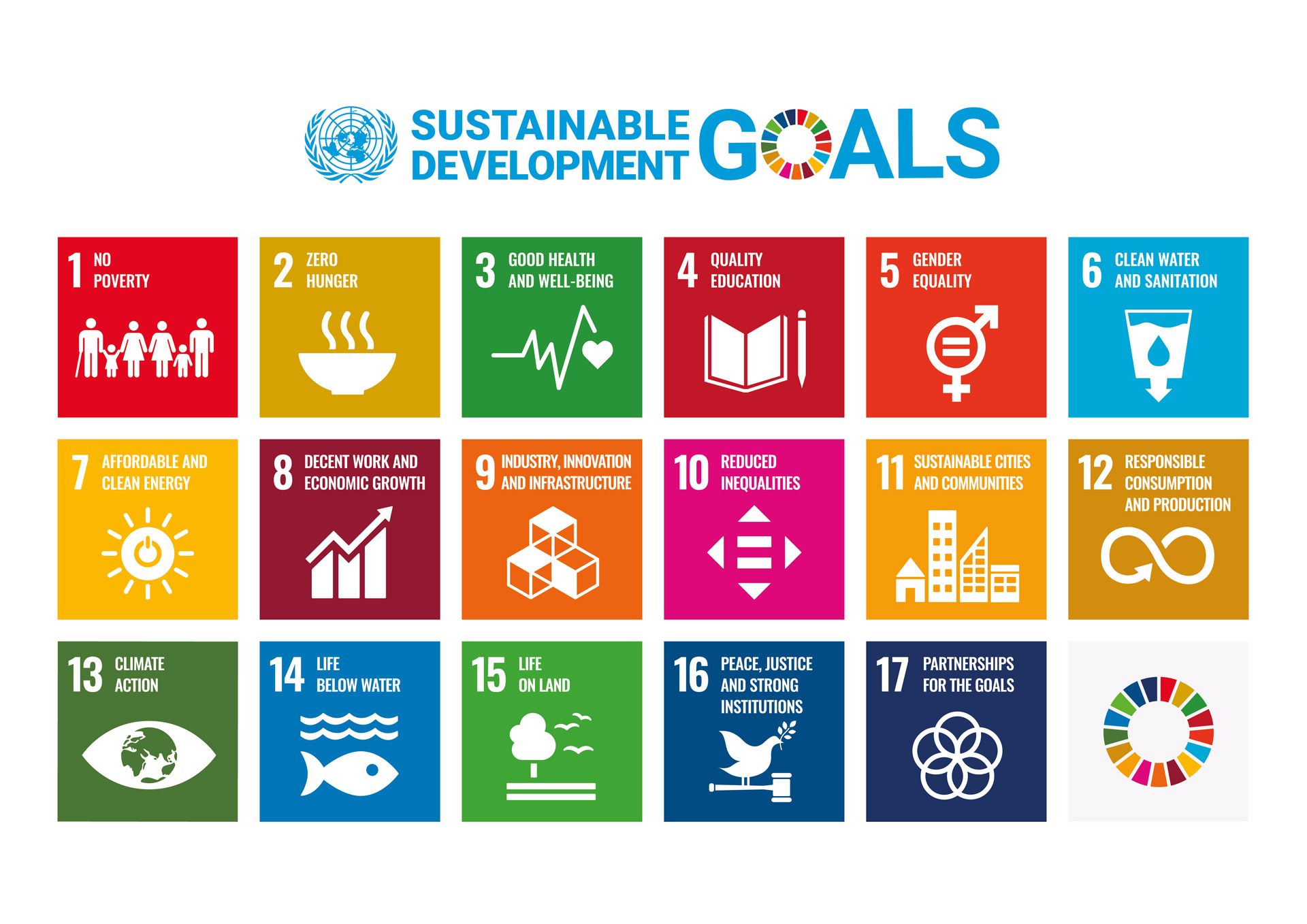
- The UN Sustainable Development Goals. Adopted by all UN member states in 2015 as part of the 2030 Agenda, the 17 SDGs give companies a shared reference point for environmental, social and economic goals.
- Science-based climate targets. The Science Based Targets initiative (SBTi) checks whether emissions targets match what climate science requires. Its Corporate Net-Zero Standard V2 adds annual progress reporting and, for the largest companies, assurance.
- Customer and rating expectations. Buyers increasingly set expectations through EcoVadis, CDP and their own supplier codes, and these expectations often decide which topics need a quantified target first.
What Makes an ESG Target Credible
A credible ESG target has six elements: a baseline year, a target value, a target year, a defined scope (which sites, entities or emissions), a named owner and a stated method. Three of the most common assessors now ask for exactly these elements.
- EcoVadis. Since 14 October 2026, quantitative targets count toward the Policy score only if the supporting evidence documents a baseline year, in addition to the target year and value. Small, medium and large companies also need quantitative targets on at least half of their key Environment and Labor and Human Rights criteria for full points. Our EcoVadis hub covers the scoring in detail.
- CDP. The climate module asks for the base year and base year emissions, whether an emissions target was active in the reporting year, and progress against each absolute target. A verified science-based target is one of the conditions for an A score (CDP reporting hub).
- ESRS. The revised ESRS require companies to disclose, for each target, its value and unit, scope, baseline value and base year, target year and methodology. Companies without measurable targets must say how they still track whether their policies and actions work.
The gap between having targets and having credible ones is wide. The Net Zero Stocktake 2025 found that 63% of the world's 2,000 largest listed companies have net-zero targets, but only 7% meet all minimum integrity criteria. In the EcoVadis Sustainability Ratings Index 2026, 78% of rated companies still lack science-based targets, and 80% were flagged for missing quantitative labor and human rights targets, almost unchanged from 79% in 2024.
Credibility also goes beyond the rating. Sustainability teams tell us that assessors rarely check whether a submitted goal and the measures behind it actually fit together. A target that reads well but has no measures, owner or data behind it may pass a questionnaire once. It will not hold up when a customer, auditor or board asks how the company is doing against it.
ESG Target Examples by Pillar
The following examples follow the format EcoVadis uses for compliant quantitative targets: a value, a deadline and a baseline year. The last row is an illustrative governance example.
Pick the baseline year you can document, not the one that looks best. A baseline without invoices, records or a stated method will not survive the first follow-up question. Timing matters too: one company we spoke with is committing its climate target before year-end specifically to lock in a baseline year that reflects reductions it has already achieved.
How to Prove Progress to Customers, Ratings and Banks
Proving progress means showing the current value against the baseline, calculated with the same method every year, with the source behind every value. That sounds simple. In practice, it is where most targets fail.
The failure points we hear about most often:
- No history. A newly required KPI has no data for earlier years, so no baseline exists. No tool can create historical data after the fact.
- Lost baseline. The baseline figure lives in an old spreadsheet, and nobody remembers how it was calculated.
- Changed method. The calculation method changed between years, so this year's value is not comparable to the baseline.
- Missing sign-off. A policy with a new target is waiting for management approval while the submission deadline passes.
The requests keep coming from several sides at once. EcoVadis looks at targets in the Policy indicator, and CDP asks for progress against each emissions target. The ESRS ask for progress in the metrics disclosures, banks increasingly ask for VSME data, and customers send their own questionnaires. One sustainability lead we spoke with described keeping a single document aligned across EcoVadis, CDP, CSRD and science-based targets as the hardest part.
{{cta}}
Targets You Can Prove: The Proof Platform
A target is a promise. Progress on it is a claim. Both count when you can back them up with evidence, every year, for every assessor. The good news: most of that evidence already exists in your company. It just needs one place, one owner and one approval.
A Proof Platform, the combination of AI-driven Proof Software and accredited experts, holds that evidence once. The KPI values with their history, the source documents behind each value and the approved policy that carries the target all sit in the software. Each comes with an owner, an approval and a version. When EcoVadis asks for the baseline, CDP for progress, the bank for VSME data and a customer for its questionnaire, the answer comes from the same source instead of being rebuilt each time, and your team and our experts review it so it becomes verified proof.
You can run it yourself in our Proof Software, or let our Proof Experts handle it. They check baselines, targets and evidence against the current EcoVadis and CDP requirements before you submit. This is why we treat proof as its own category, not as a feature of ESG software: it sits underneath every rating, report and request.
To organize the data behind your KPIs, read our guide to ESG data management. For why data and proof are not the same thing, see our Proof Gap paper.
It's Time to Prove
What You Already Do
Your next questionnaire, assessment, or audit meets traceable proof.
With Sunhat, you verify your evidence once, then reuse it everywhere.
See how you can get there.



Frequently Asked Questions
ESG goals are the commitments a company makes on environmental, social and governance topics, such as reducing emissions, improving workplace safety or preventing corruption. They set the direction. To be assessed by ratings, customers and banks, they need to be turned into measurable targets with a baseline year, a target value and a deadline.
A goal describes the direction, for example "reduce our climate impact". A target makes it measurable, for example "cut Scope 1 and 2 emissions by 50% by 2030 from a 2020 baseline". Ratings such as EcoVadis and frameworks such as the ESRS assess targets, not goals, because only targets can be tracked.
Environmental: cut absolute Scope 1 and 2 emissions by 50% by 2030 from a 2020 baseline. Social: reduce work-related accidents by 20% by 2030 compared to 2020. Governance: all employees in high-risk roles complete anti-corruption training every year. Each needs a baseline year and evidence for every value reported.
Without a baseline year, a target cannot be measured and progress cannot be shown. Since 14 October 2026, EcoVadis only accepts quantitative targets if a baseline year is documented in the supporting evidence. CDP and the ESRS also ask for the base year alongside the target.
By reporting the current value against the baseline, using the same method every year, with the source document behind each value and a named owner who approved it. A Proof Platform such as Sunhat keeps this evidence in one place and reuses it for EcoVadis, CDP, VSME and customer requests, self-service or with our Proof Experts.


What Manual Proof Work Costs Your Team
Discover your estimated time and money spent on ESG and compliance work with our free Proof Gap Cost Calculator.